About The Kudu
What makes the Kudu such an iconic African animal?
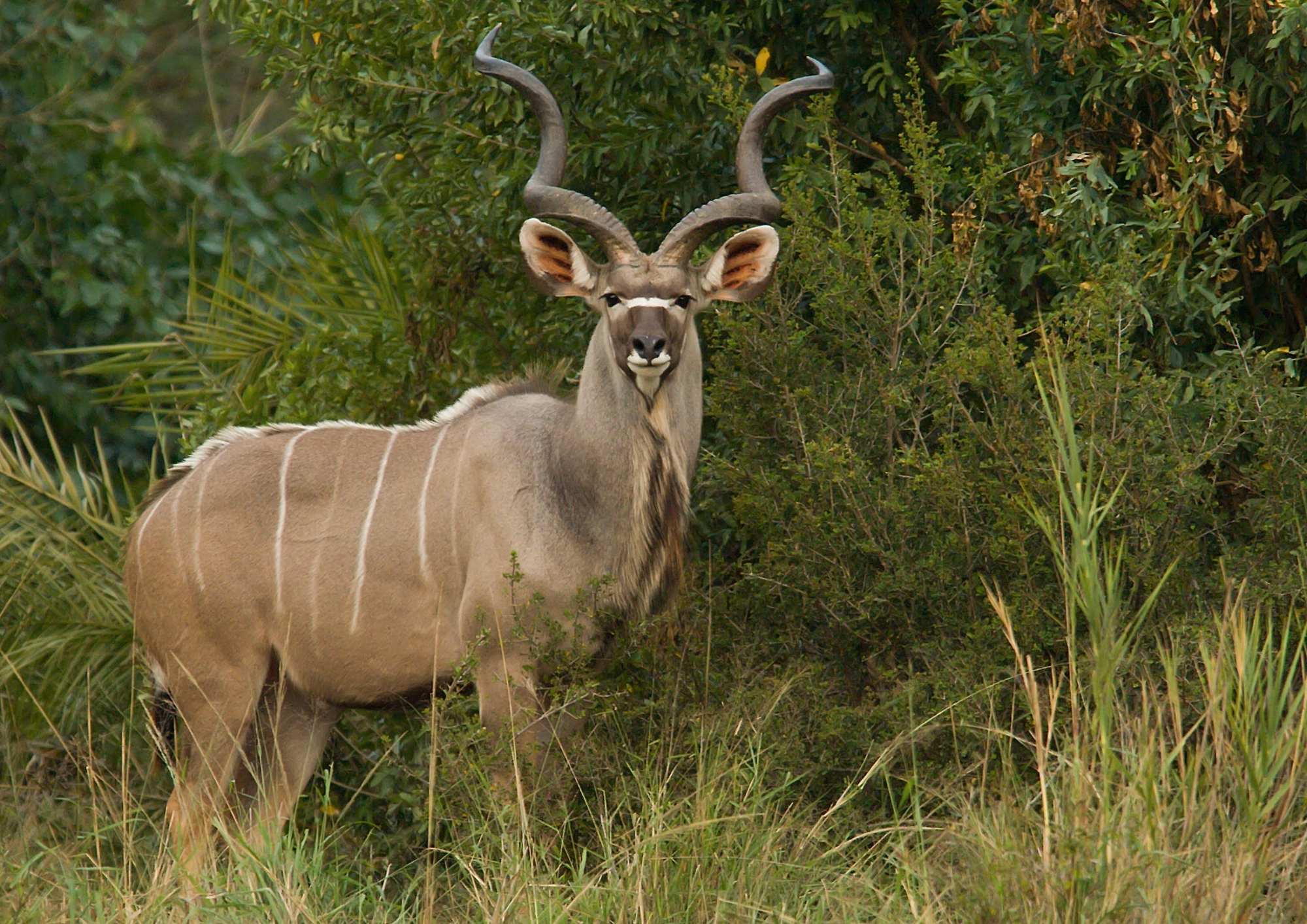
The Kudu is truly iconic, and it's easy to see why. As one of Africa's most recognizable antelopes, the Kudu embodies regal majesty with its towering horns and striking appearance. I've seen firsthand how our guests are immediately captivated by these magnificent creatures during our Kosher Safaris.
Male kudus are particularly impressive, reaching heights of up to 1.8 meters and weighing as much as 270 kg. Their spiraling horns, which can grow up to 1.5 meters long, are a sight to behold, and the distinctive white stripe down their backs adds to their unique charm. They are incredibly adaptable, thriving in diverse environments from open grasslands to dense thickets.
Where can you typically find Kudus in the wild?
Kudus are widespread across Southern and Eastern Africa. We often spot them in reserves like Kruger National Park and Pilanesberg National Park, both popular destinations on our Kosher Safari itineraries.
Their adaptability allows them to thrive in various habitats. As herbivores, their diet consists mainly of grasses, leaves, and herbs. They are social animals, often living in herds of up to 50 individuals, typically led by a dominant male and including several females with their calves. Kudus are also territorial, using their impressive horns to defend their home range.
How do Kudus communicate and behave socially?
Kudus are social creatures with a complex communication system. They use a range of noises, including whistles, grunts, and snorts, to interact with one another within their herds.
I've noticed that their behavior is often fascinating to observe. The way they interact, the subtle cues they give each other – it's a window into a world of animal communication. Seeing a herd of kudus gracefully moving through the bush is an experience that stays with our guests long after the safari ends. We always emphasize respecting their space and observing them from a distance to minimize any disturbance.
What are the threats to Kudu populations, and how are they being conserved?
Sadly, Kudu populations face threats from habitat loss and hunting. Overhunting and the destruction of their natural environments have led to a decline in their numbers in some areas.
Fortunately, various conservation programs have been implemented to protect these magnificent animals. These initiatives focus on preserving their habitats, combating poaching, and promoting sustainable wildlife management. As a responsible tour operator, The Kosher Safari supports these conservation efforts and educates our guests on the importance of protecting Kudus and their ecosystems.
From a Jewish perspective, *tza'ar ba'alei chayim* (the prohibition of causing unnecessary suffering to animals) compels us to act as stewards of the earth and protect these creatures. We emphasize responsible tourism that minimizes our impact on the environment and supports local communities involved in conservation.
Why are Kudus significant in African culture and tourism?
Kudus hold a significant place in African culture, often depicted in art and literature as symbols of power and strength. They also feature prominently in African mythology and folklore.
They are also a popular attraction for tourists visiting zoos and safari parks, drawing visitors from around the globe who are eager to witness their beauty and majesty. As a leading kosher safari company, we at The Kosher Safari recognize the importance of these animals in the African landscape. That is why we strive to share the wonders of these animals with our guests while ensuring the preservation of their natural habitats.
Ready to experience the magic of seeing Kudus in their natural habitat while enjoying a fully kosher safari experience? Contact The Kosher Safari today to plan your unforgettable adventure!
Ready to go?
Plan your kosher safari
Tell us your dream trip and we'll create a bespoke proposal within 48 hours.
Get in touch