SafariWildlife
The Wonders of The Wonders of Wildebeest
3 min readBy Devora Levy
Key Takeaways
- * Wildebeest are vital to the African ecosystem, shaping grasslands and feeding predators.
- * The Great Migration is a breathtaking journey driven by survival.
- * Herds of wildebeest exhibit complex social structures and impressive teamwork.
- * Read on to discover the best kosher safari locations for wildebeest viewing.
What makes wildebeest so special in the African bush?
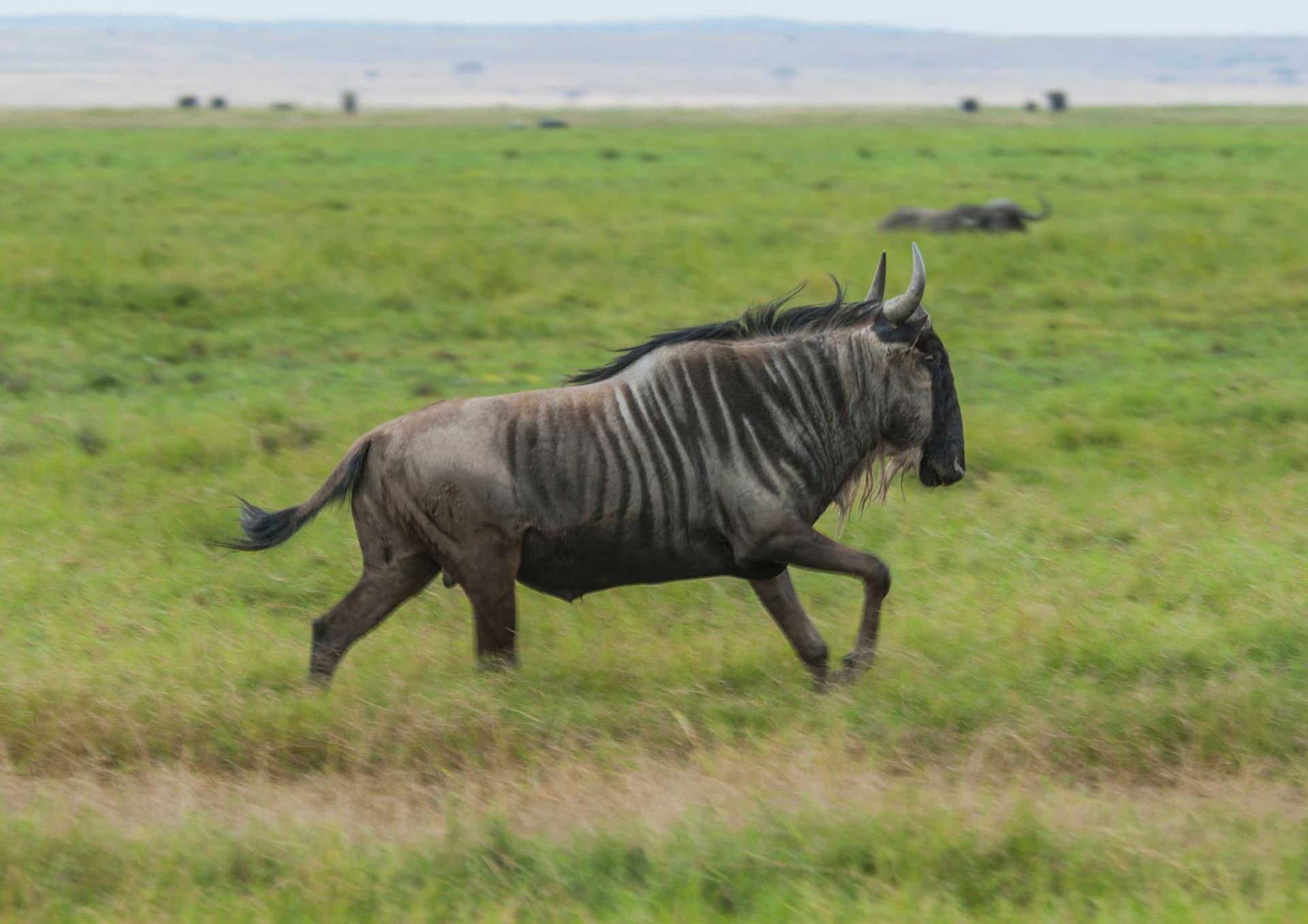
Wildebeest, also known as gnus, are truly iconic animals of the African savanna. As co-founder of The Kosher Safari, I've seen firsthand how captivated our guests are by these creatures, with their distinctive black and white markings, curved horns, and, let's be honest, sometimes rather quirky behavior. They're an integral part of the African ecosystem, and a sighting is always a highlight on safari.
They're not just pretty faces, though! Wildebeest play a crucial role in maintaining the health of the grasslands. Their grazing habits encourage new growth, and the massive herds create pathways that other animals can use. Plus, they are a vital food source for predators like lions, cheetahs, and hyenas, keeping the circle of life turning. It's truly something special to witness.
Why is the Great Migration of wildebeest such a big deal?
It's one of the most spectacular natural events on the planet! The Great Migration sees millions of wildebeest journey from the Serengeti in Tanzania to the Masai Mara in Kenya, and back again. I've seen it many times, and it still takes my breath away.
This isn't just a leisurely stroll; it's a challenging and dangerous trek. The wildebeest must cross crocodile-infested rivers, evade predators at every turn, and endure harsh weather conditions. They migrate in search of fresh grazing and water, driven by instinct and the constant need for survival. For our kosher travelers, seeing the migration is often a spiritual experience, a reminder of the power and resilience of nature.
Kosher Safari Tip: The best time to witness the Great Migration is typically between July and October when the herds are in the Masai Mara. Plan your trip well in advance, as accommodations fill up quickly!
How do wildebeest organize themselves in herds?
Wildebeest are social animals that live in herds, but their social structure is more complex than you might think. Both males and females form herds, with the males tending to be larger and more dominant.
Within the herd, there is a hierarchy among the males, based on size and strength. The dominant males lead the herd and are responsible for protecting it from predators. They will often form a protective circle around the females and young, a truly impressive display of teamwork. I've seen firsthand how these massive herds move as one, an incredible feat of coordination.
Where are the best places to see wildebeest on a kosher safari?
Wildebeest can be found in numerous wildlife reserves across East and Southern Africa. We've curated some incredible kosher safari experiences centered around these magnificent animals.
- Serengeti National Park (Tanzania): This is where the Great Migration begins, offering unparalleled opportunities to witness massive herds.
- Masai Mara National Reserve (Kenya): The destination of the Great Migration, offering incredible river crossing viewing opportunities.
- Ngorongoro Crater (Tanzania): A unique ecosystem where wildebeest thrive alongside a variety of other wildlife.
- Pilanesberg National Park (South Africa): A smaller park, but with excellent game viewing and easier access for shorter trips.
Kosher Safari Tip: When planning your kosher safari, consider the time of year and the location of the Great Migration. We can tailor your itinerary to maximize your chances of seeing this incredible spectacle, all while adhering to the highest standards of kashrut.
How can The Kosher Safari help you experience the wonders of the wildebeest?
At The Kosher Safari, we specialize in crafting unforgettable, bespoke glatt-kosher safari experiences. We understand the unique needs of Jewish travelers and ensure that every aspect of your trip, from the food to the accommodations, meets the highest standards of kashrut. I'm so proud of the experiences we create.
We can design a personalized itinerary that focuses on wildebeest sightings, including opportunities to witness the Great Migration, learn about their behavior, and appreciate their role in the African ecosystem. Our expert guides will provide fascinating insights into these amazing creatures, while ensuring your comfort and safety. Contact us today to start planning your dream kosher safari!
D
Devora Levy
Co-Founder & Travel Writer, The Kosher Safari
Devora has been organising luxury kosher safaris across Africa since 2022. She writes from first-hand experience — every lodge, route, and meal plan in these guides is one she has personally arranged for guests.
Ready to go?
Plan your kosher safari
Tell us your dream trip and we'll create a bespoke proposal within 48 hours.
Get in touch

